Nativity Exhibition in Rome
This article was contributed by a local member of The Church of Jesus Christ of Latter-day Saints. The views expressed may not represent the views and positions of The Church of Jesus Christ of Latter-day Saints. For the Church's official site, visit churchofjesuschrist.org.
Fine Neapolitan, Oriental-Palestinian, and Roman folk art nativities are on view to the public until Sunday, January 9, 2022, at the Rome Temple Visitors’ Center.
PALESTINIAN NATIVITY SCENE
The Palestinian nativity represents the actual place where Jesus was born. The landscape is typical Palestinian with mountains, a desert oasis, white houses with domes, and date palms. Even the sky is blue, with the comet star.
NEAPOLITAN NATIVITY SCENE
The first mention of a nativity scene in Naples appears in a notarial record in 1021, but the invention of the Neapolitan nativity scene is attributed to San Gaetano da Thiene, who arrived in Naples in 1534 and began the tradition of setting up nativity scenes in churches and private homes.
Towards the end of the seventeenth century, the theatricality of the Neapolitan nativity scene was born, enhanced by the tendency to mix the sacred with the secular. Nobles, the bourgeoisie, and common people competed to set up more and more refined scenic designs. Since then, Neapolitan nativity art has remained unchanged for centuries. Famous is the street of the nativities, San Gregorio Armeno, in Naples.
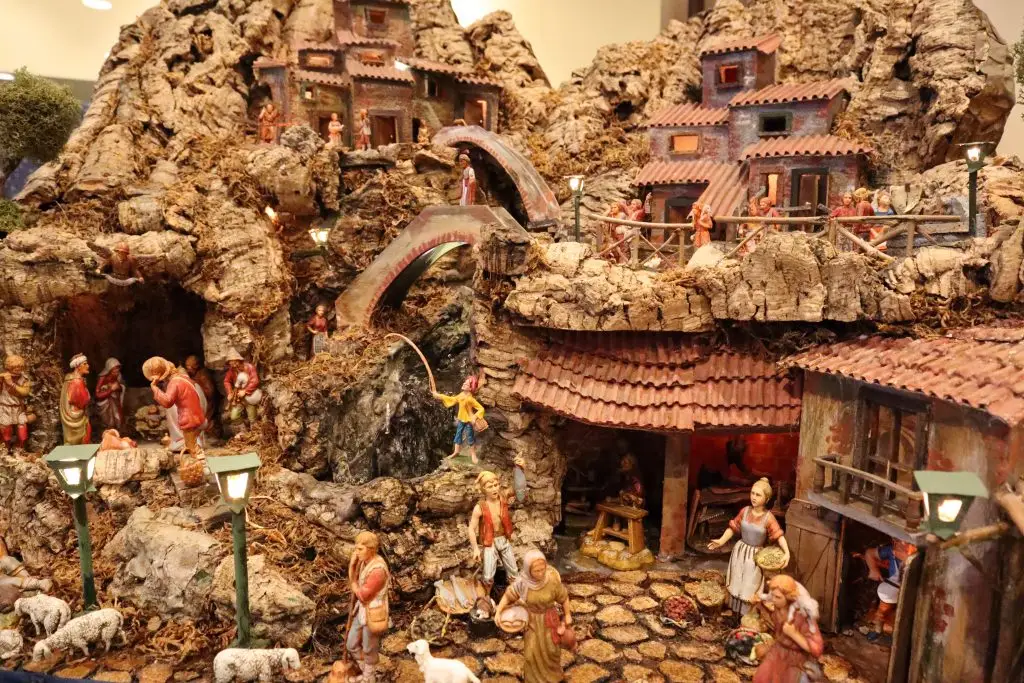
NATIVITY SCENE OF DISAPPEARED ROME
In the nativity scene of the disappeared Rome farmers and artisans of the past are represented in their daily occupations. The rocky landscape is humble and solitary, with some anachronism that associates the nativity scene with small country churches.
NEAPOLITAN BAROQUE NATIVITY SCENE
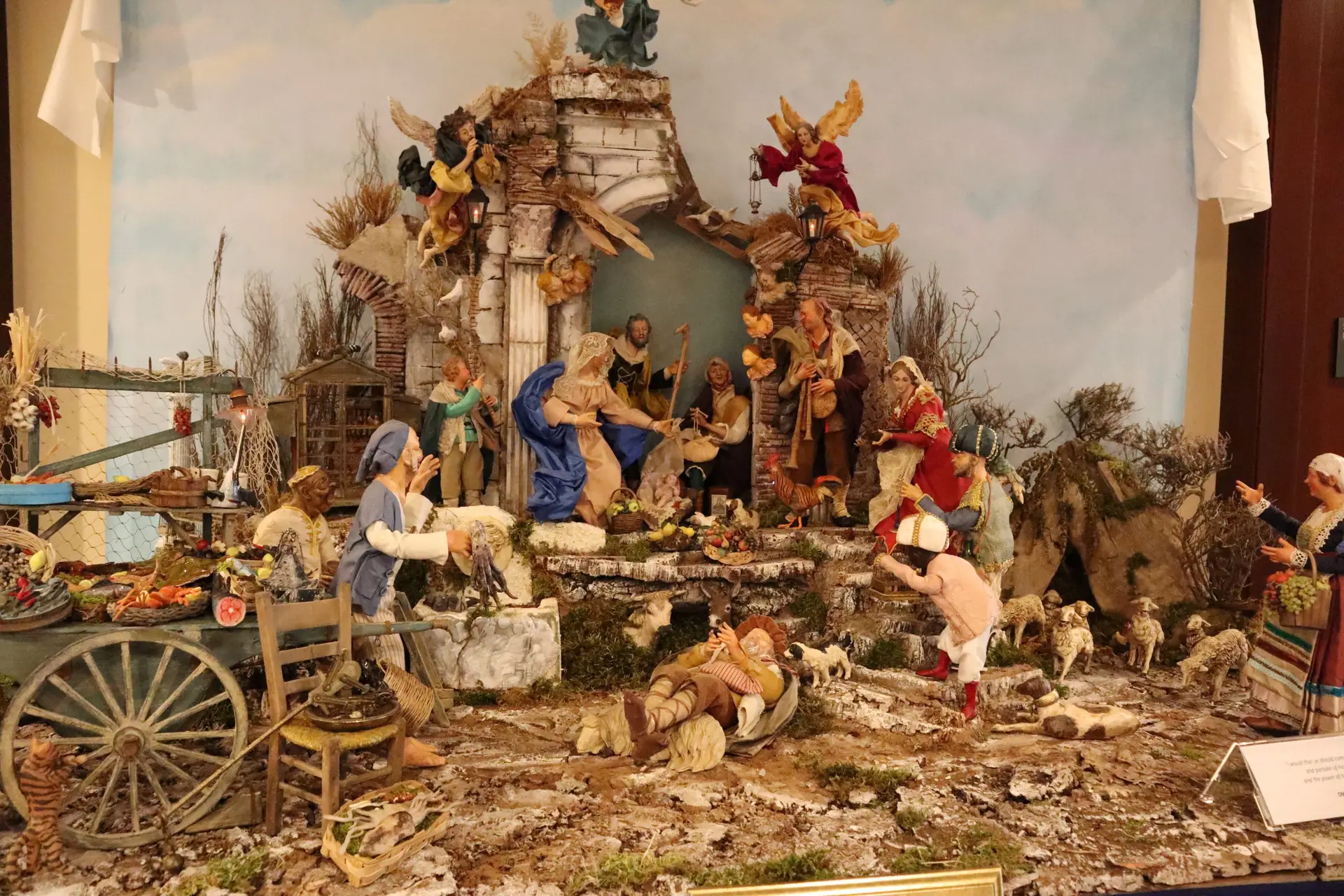
It is the classic Neapolitan nativity scene in Baroque style. It is set on a rock where a ruined Roman arch looms. The birth of Jesus changes history; it is the end of an empire and the birth of a new civilization.
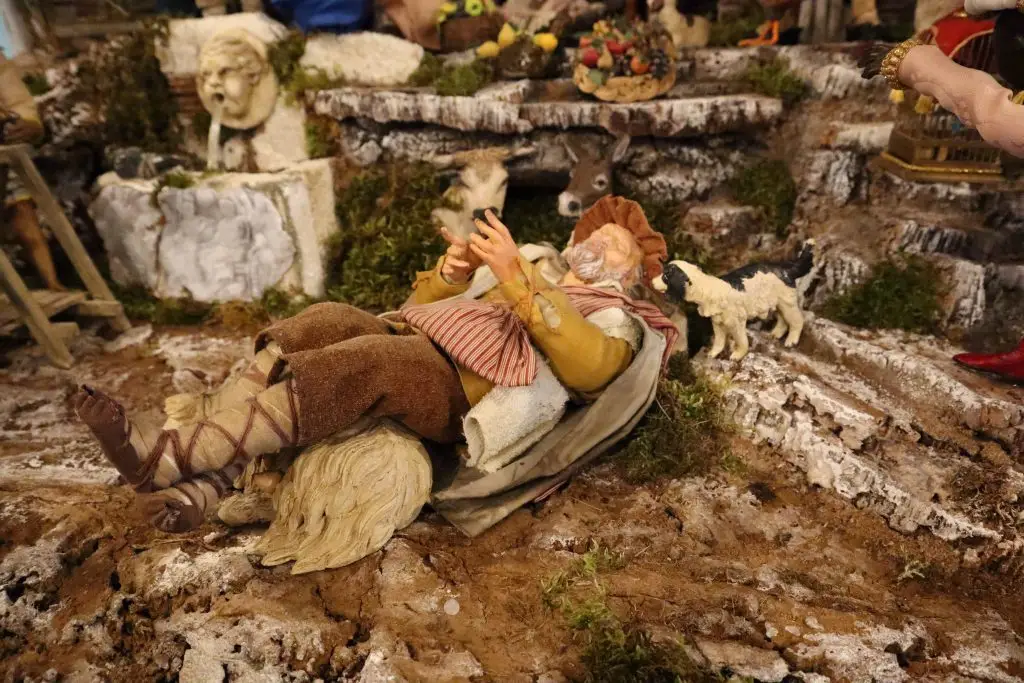
A shepherd sleeps on two sheep as pillows and smiles as he dreams of the nativity scene we see. His name is Benino. Benino represents the shepherds who were awakened by angels to give them the news of the birth of the Messiah. The awakening is considered a rebirth. Beware of waking Benino suddenly, his dream and the nativity scene could suddenly disappear.
Joseph and Mary watch over the child. Next to them, a shepherd shows a lamb about to be sacrificed. The parallel to Christ is obvious. Jesus is the Lamb of God, given as a sacrifice for the sins of the world. To the right and left of the manger, two shepherds play a lullaby to lull the little infant to sleep.
Three men from the East, richly dressed, adore the baby Jesus. They are not the Three Wise Men–they will arrive on January 6th. But they have come earlier to signify that the Messiah is the King and Savior of all people.
Finally, a fish merchant displays a myriad of species in his cart. Mussels, snails, squid, octopus, rays, anchovies, cuttlefish, swordfish, crabs, and shrimp, in a setting of red peppers, lemons, garlic, lamps, and nets. The fish merchant offers the child an octopus as a gift and while looking towards him he does not notice that a cat, furtively, is trying to get on his cart.
All these nativities will be on display to view until January 9th free of charge. We hope you will join us to enjoy this beautiful art and celebrate the birth of our Savior Jesus Christ!